To be or not to be… Metis?

I have so many questions … will I ever know the answers?


I was always told that Metis people were distinct in language and culture.

I probed on a bit (because that’s what I do) and would still ask, ‘but this Metis culture had to come from somewhere, so where?’ And I was still told that Metis are distinct in language and culture. So when people started rewriting their own bios of who they were, first from the Metis Nation and now claiming Cree/Anishinaabe + Irish/Scottish/European instead of saying Metis, I was more than a little confused.

It seems very convoluted, and it may be in some cases, but does this mean the Metis organizations will be shutting down if people are not signing on as members? 

And is that how it works? Because I really don’t know.

But I do know that although you can claim to be Cree/Algonquin/Etc., you may still not have First Nation status. There is a funding pot out there which has recently come with rights, for people who are members of the Metis Nation. But they are our (numbered) Treaty rights – and that’s not right.  But I also know that there are people who identified as Metis, have always identified as Metis, and WILL always identify as Metis, regardless of how much funding or access to resources/hunting/lands/etc., they can get.

And now I ask (as I always do), why are there so many questions?

Lack of knowledge for one, but also because the rule book keeps changing. Educate me. Don’t berate me.

My opinion (and strictly my opinion) on this subject boils down to this – you can have your own spiritual beliefs, or religious beliefs, or neither, because there are so many things we can “choose” to believe, but why isn’t it okay to be whoever you are without having to “claim” or be something you are not.

Well, it is okay. That’s perfectly okay. You do you, authentically.

But what is not okay, is when you use it to inflict harm directly or indirectly towards another human or group of humans for your own ego, selfish gain, stature and greed. We have all seen the many examples of this in the media. This very much ties into speaking for “Indigenous voices” but that is a commentary for another day.

So, people! Again! Be who you are, it’s ok!

But if you are not who you want to be – then you really have to look deep inside you and figure out why that is… and stop blaming and/or CLAIMING.

The Making of the Moose Bone Broth (2022 version)

Each year our family puts moose bones away in the freezer and at least once, if not twice or a third time in a year, I get the opportunity to make some bone broth! Well, this year isn’t any different.

So why moose bone broth, you ask? You can make bone broth with pretty much any type of bone but moose bones are plentiful during hunting season and they can make some nice, oily, bone broth. And it doesn’t hurt that it can help with getting you the good nutrients that your body needs.

This year I didn’t have the patience to create a video like I had hoped for, but I took some photo stills that will guide you through the bone broth making process.

Aaaand here we go….

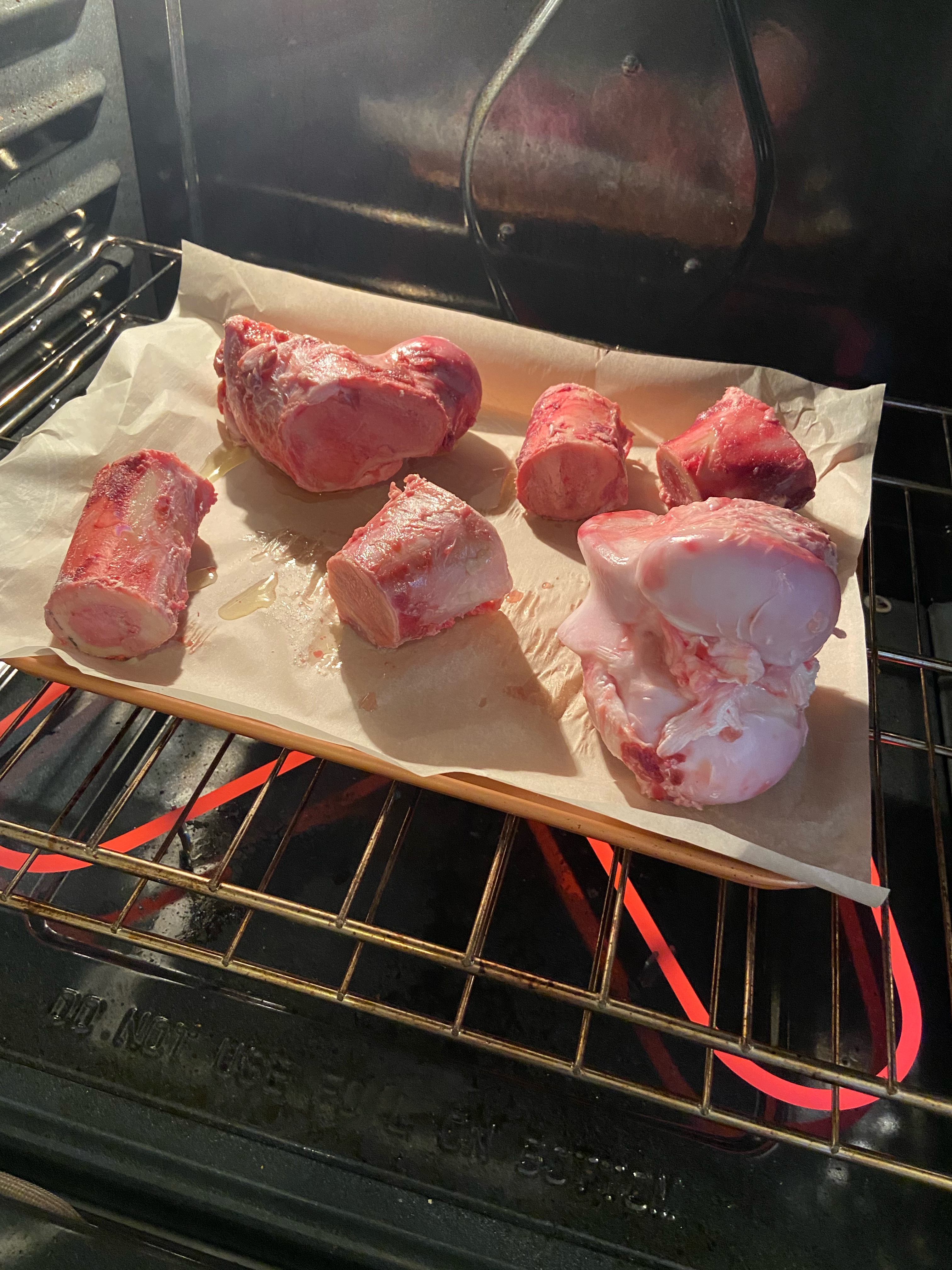
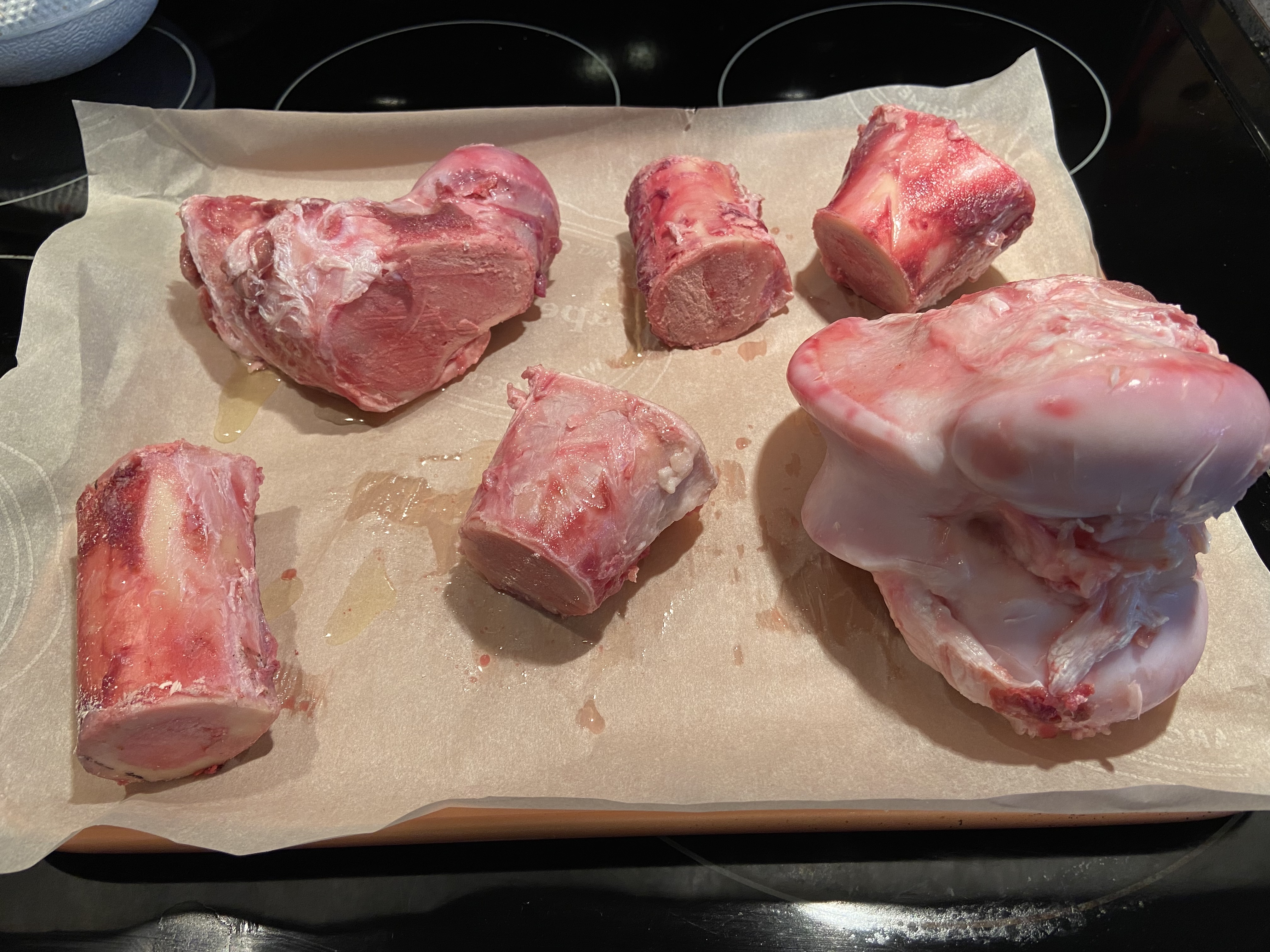
First, you need a few pounds of cut up moose bones and they need to be cut up in small enough pieces to fit into a crock pot.

For the next steps, you have options –

You can : Blanche the bones!

Whiiiiich is not what I opted for this time, but in past ‘bone broth-ing’ I have done this. All blanching is, simply submerging the bones in cold water and bringing to a boil for about 20 minutes. And then…

It’s time to : Roast the bones!

Which I did do this time.

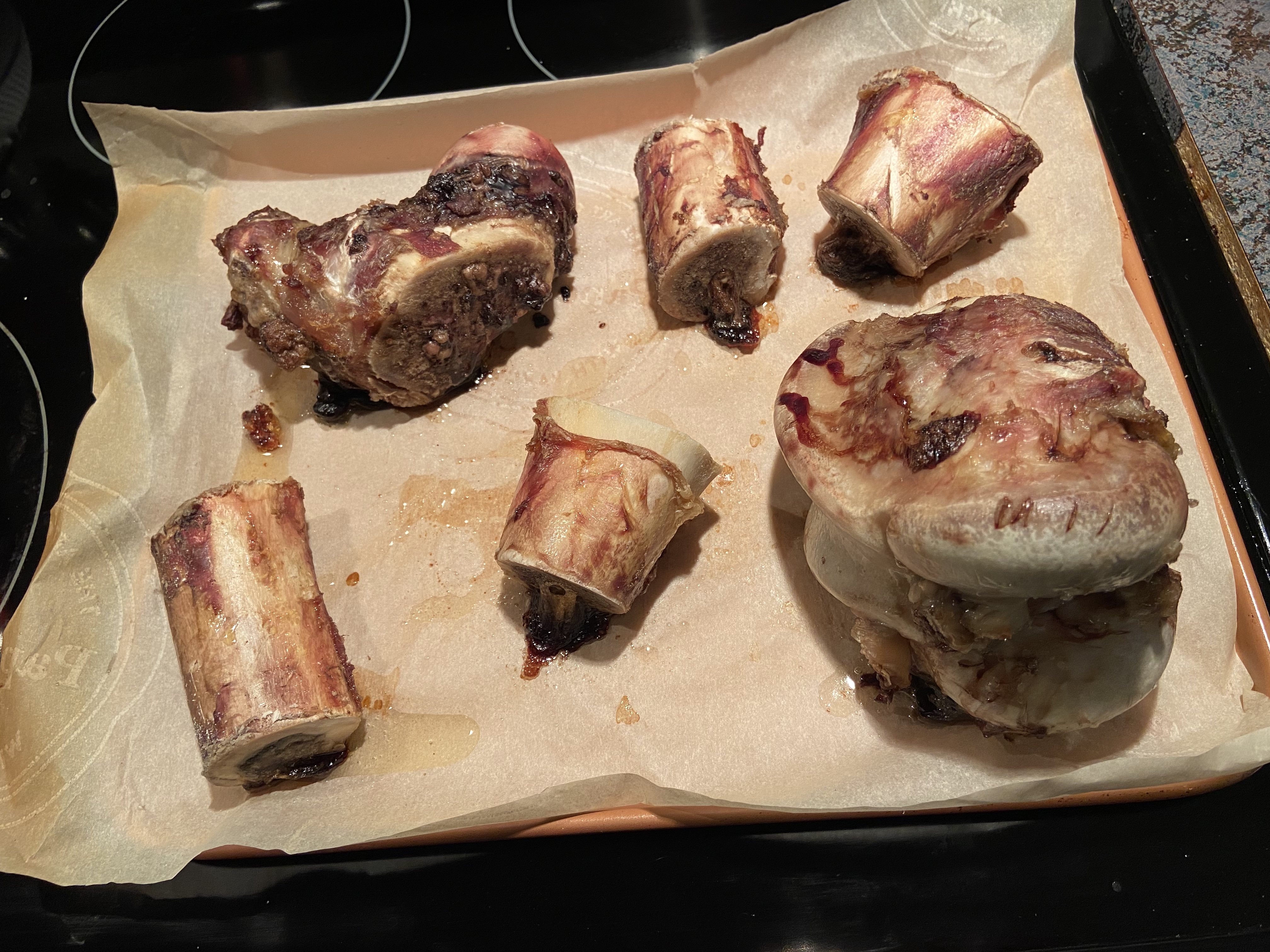
With the bones on a pan and an added sprinkle of oil (olive for me), set the oven to (pre-heated) 375 ° and once that little beep goes off, it’s time to put them in… for about 45 minutes to an hour.

{Now, confession: I cannot eat certain vegetables because of allergies and intolerances, so mine is pretty plain, but you can also include carrots, celery, onions, etc on the “caramelizing” pan of moose bones}

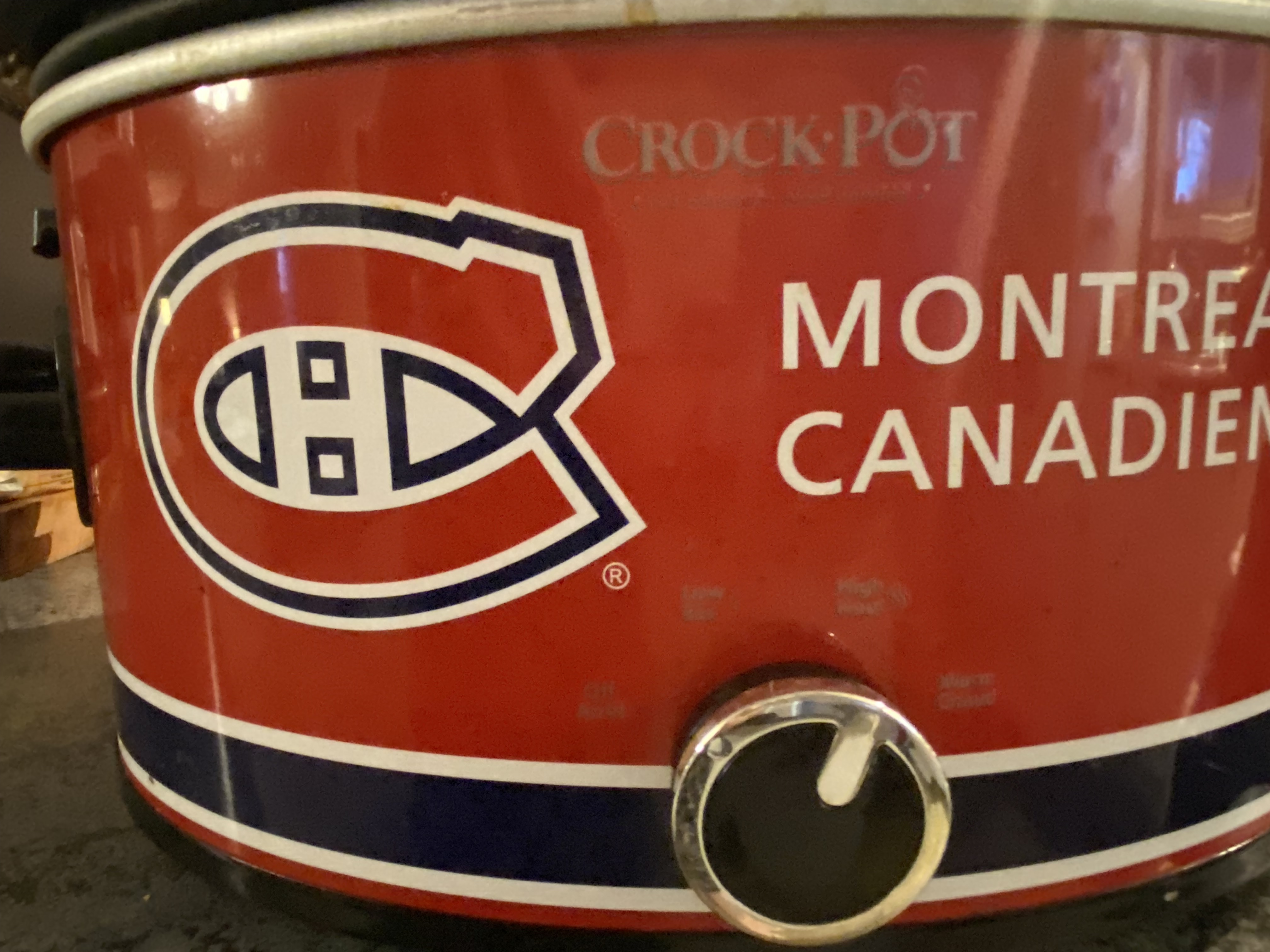
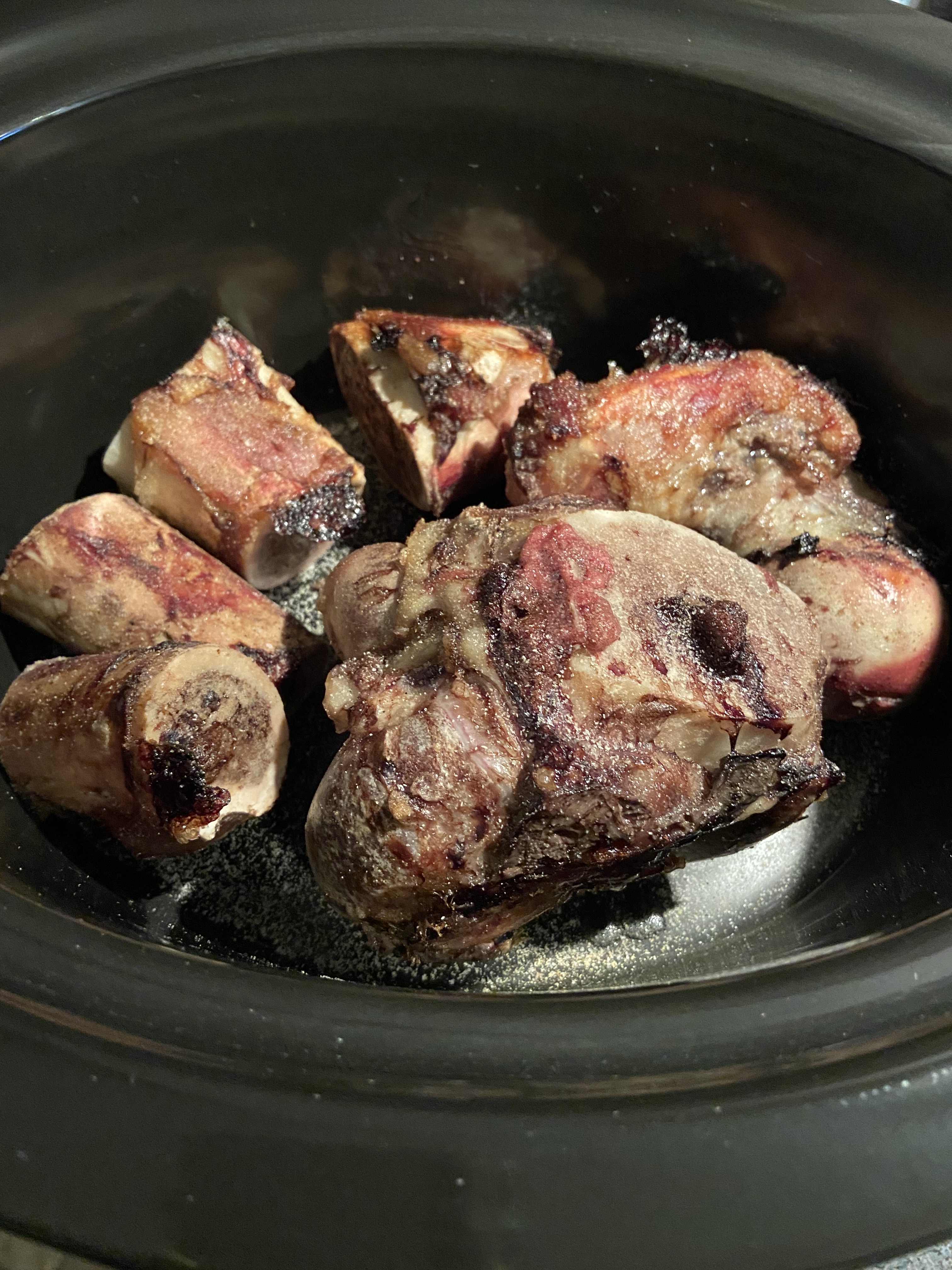
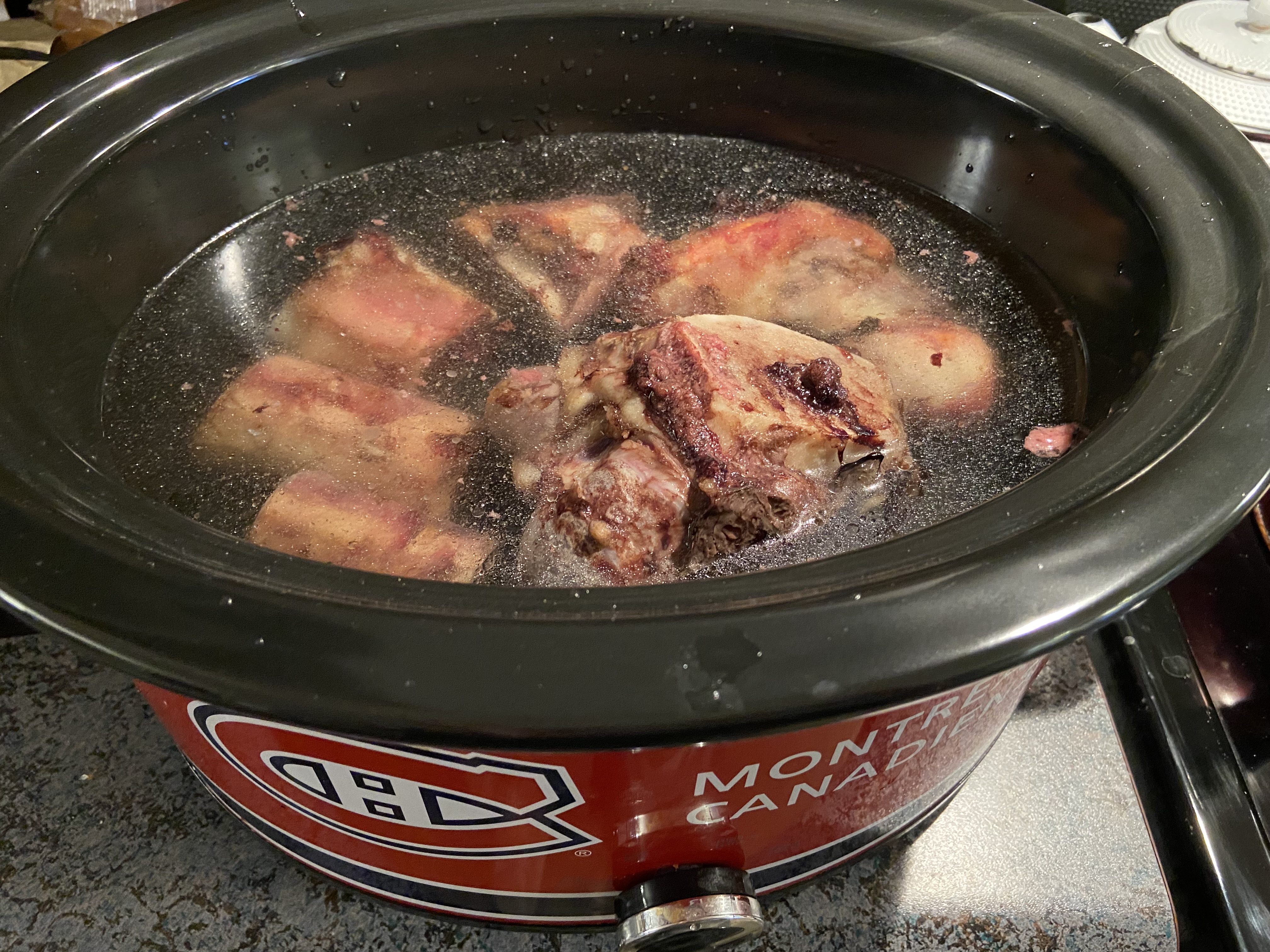
After they caramelize, remove from the oven and place in a crock pot, preferably a Montreal Canadiens one, or you know, any themed crock pot.

But, if you are like me (or maybe just don’t want so much flavour – still a lot without the veg) you can add some onion powder, salt and pepper to season – apple cider vinegar optional.

Next fill the crock pot with water, a little more than 3/4’s.

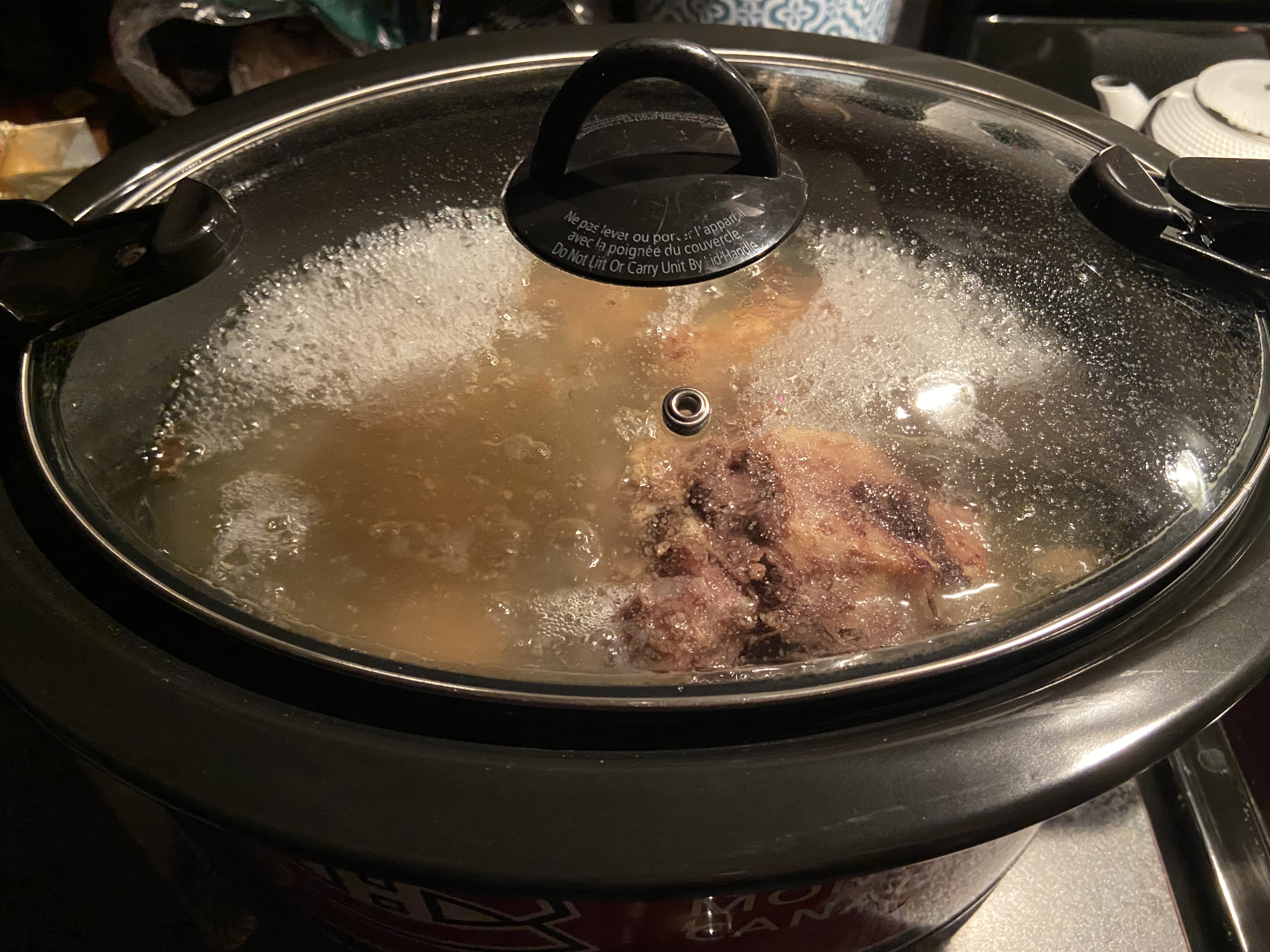
And then… turn on high and DO NOTHING! For the next 18-24 hours. Well, start it on high and about half way through the 18-24 hours turn the crock pot to low.

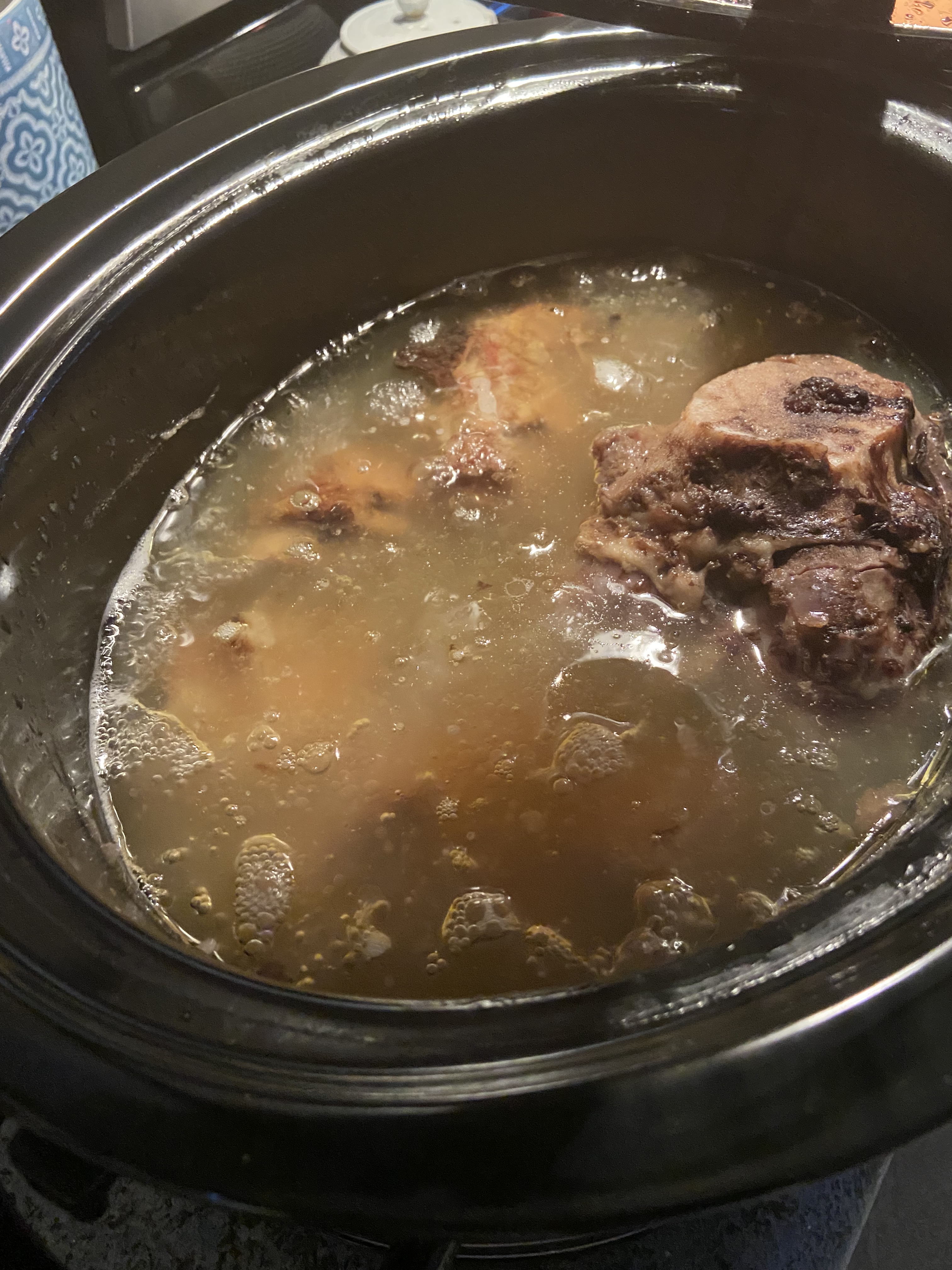
As it simmers, and slowly boils, and pulls all the good nutrients out of those moose bones over all those hours, you don’t have to do anything at all. Until 18-24 hours later when….

We are not quite done yet but the smell and consistency by this time are incredible.

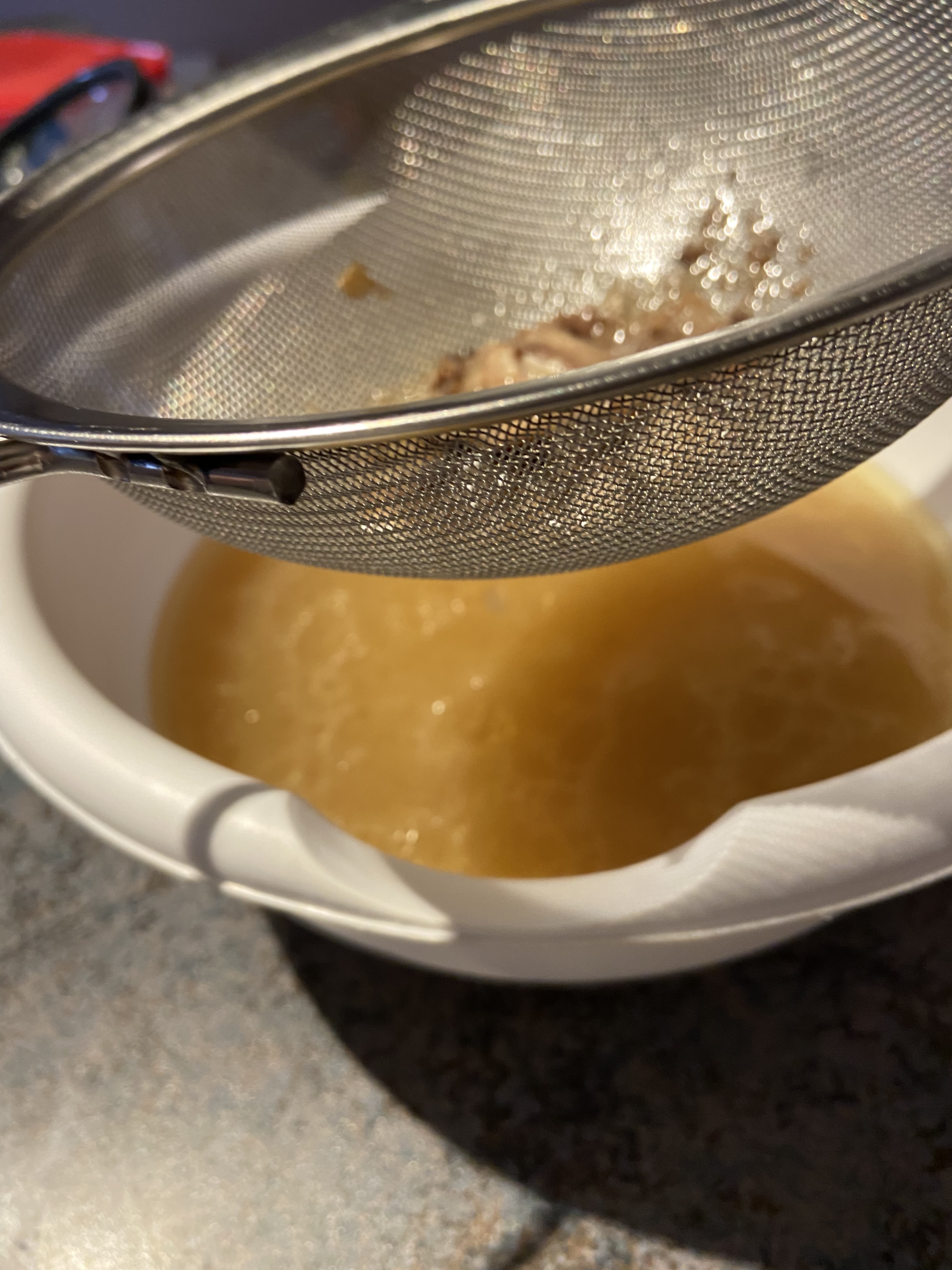
Next comes the straining…

and voila!

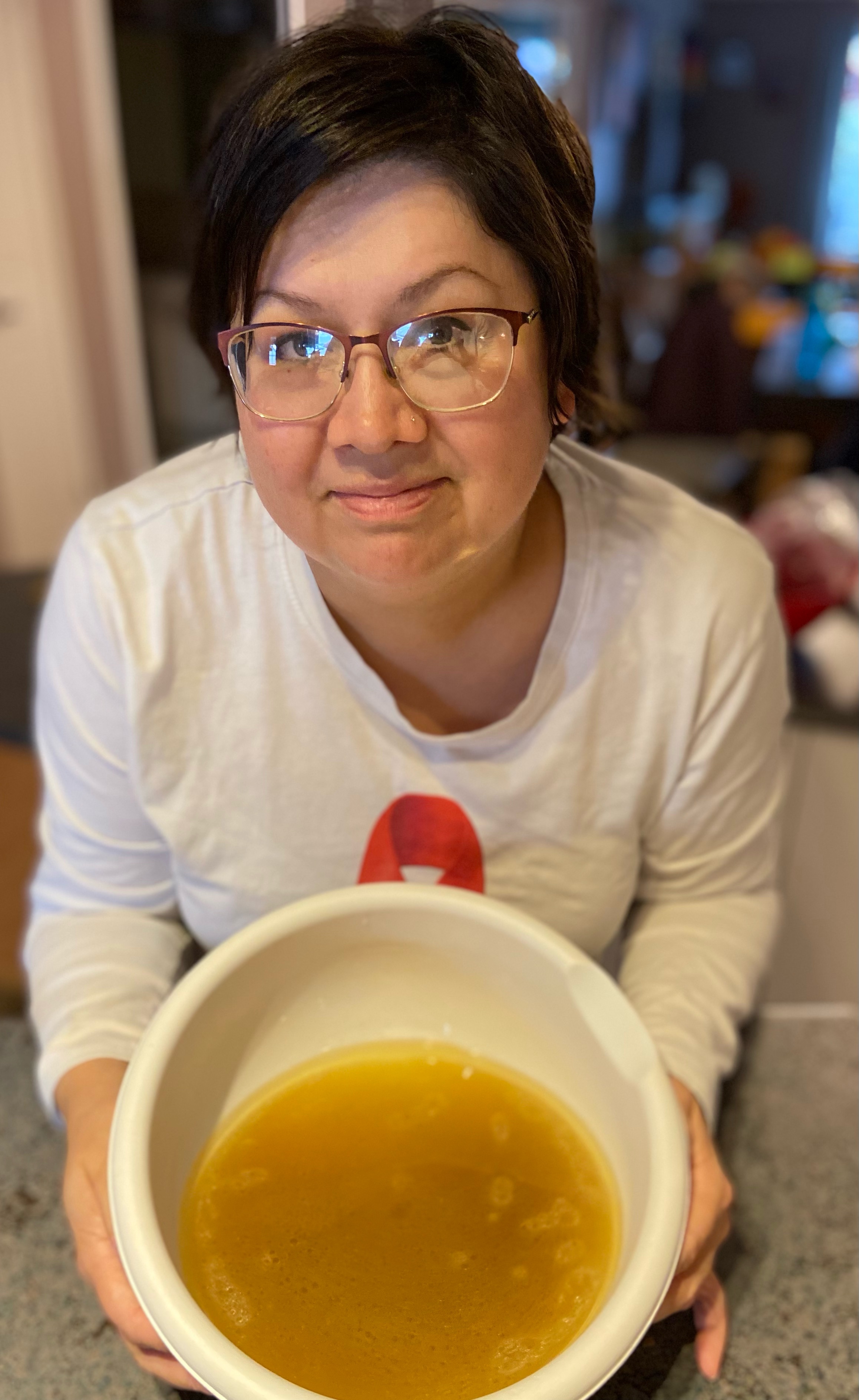
The thick, flavourful, good for you moose bone broth. You can add it to moose stew, or use as soup stock, or just pour yourself a drink of it. I made a few jars until I’m ready to make the next batch. And I put them away in the freezer until it’s time to use

Miigwetch for taking the time to check out the making of moose bone broth. And please, find your own way to do it, with just a few hints from me.

Where My Spirit Lives

~Originally written June 15, 2015. Finished September 26, 2021~

On October 29, 1989, I watched a movie about Indian Residential Schools. It probably wasn’t the first time I had heard of residential school, but it was the first time I can recall paying it any attention.

I remember my Grandmother and I were in our usual Sunday night spots in the living room. I was laying lazily on the couch, and she in her recliner rocking chair, busy sewing or knitting something–of which I cannot recall. But it was our Sunday night and we were patiently waiting for CBC’s Sunday Night movie to start.

The dining room light and kitchen lights were off, the living room only had one lamp that survived the 70’s but it gave the room a quiet, dim, peaceful feeling.

My Grandmother, or my Nanny as I called her, sat in her rocking chair, and what a beaten up old chair it was. But she made it comfortable with cushions and blankets. It was a black faux-leather chair and I think it had some kind of pattern under the quilt. The foot rest kicked out and you could relax in it, but I don’t think my Nan every used the foot rest.

As I sit and think about that scene, remembering it so clearly, it is one of the warmest and most comforting feelings ever. If anything, Sunday nights at our house were always the same. I don’t say that with disdain, at least not anymore, but it was something you could count on, just like the CBC Sunday night movie. 

A new movie, Where The Spirit Lives, was on that night. I was of course hoping for Anne of Green Gables to magically appear Sunday after Sunday because it was my favorite, but just like I sat through boring movies throughout my childhood, thanks to our cable-less TV, I sat and waited for this one to start.

I do remember my interest peaking when it came on because the movie was about Indians. We could say Indians back then without batting an eye. I still say Indian occasionally as a force of habit, but that’s a whole other story altogether. But at 12 years old I knew I was an Indian, an Indian girl in a sea of white faces.  

Although being raised in my childhood in an urban setting, I still knew where I came from. I visited quite often throughout the year with my Nan. Her and I getting up at 5:30 am to get ready to go on the hour long bus ride and five hour train ride. This didn’t include the boat taxi in the summer, or the taxi on the ice in the winter– to the dusty or cold roads of an island full of people who were like me, who shared my history, and my family roots.

The lack of indoor plumbing was a pretty big lowlight, as I was used to having a running toilet at my Nan’s house. The bugs were particularly bad in the summer but birthdays were always fun. My Nan would make a big slab cake and we would drop it off to family and they would always give me money. As a kid who grew up with little money, I always like that part.

The ‘drunkers’, as we called them, would come banging at your door or occasionally you could see one sleeping in the ditch. My Grandparent’s never drank so seeing someone drunk was a passing thought that I don’t remember paying much mind to, as I didn’t have to live in a house with drinking.

The centuries old tombstones, historical markers and the HBC site brought in droves of tourists visiting each summer. People sold their crafts to the tourists, including my Nan. The kids sold rocks and fossils. There were tours, busses and even a large boat. For years I would see it filled with tourists but it wasn’t until I got to be a teenager that I would get to ride on it at a family member’s wedding. Yes, tourism was big and booming.

I also knew how important Church was. With a Nan who went to residential school, Church was sacred in her eyes, and I can see that now. Looking back and the memory I have of that Sunday night, I can measure my understanding of the church before I watched this movie and the confusion and anger I felt after I watched it. This was my first real insight to residential school, my own people and a much larger shared history.

I asked my Nan if she went to a residential school, “What was it like? Was it like the movie?” She said it was ok and made some comments about horses in the wintertime but that was it. Years later she would say much more but from about 1989 to 1999, her lips stayed tightly sealed. She had to talk about it when the compensation started, but my aunt was the only person who was ever privy to very little of that information.

The years I spent in my Grandmothers lap, and remembering the times of her holding me or doing my hair, or putting me to sleep, or doing her best to comfort me, were nothing like how I imagined she was raised. She had told me that her mother also went to residential school but didn’t offer much in terms of specifics. Her mother and my Nan also could be very cold women at times. Fortunately, I never experienced that save a few times in my life with her. But any parenting after residential school would have been greatly difficult, maybe not always in terms of acting proper (which was a staple in my case as I grew up) but I can’t imagine being on the receiving end of that parenting.

A few years ago, I got a job as a Gladue Writer and it opened my eyes and heart in so many ways. I knew for years, prior to her passing, that my Nan endured and suffered a lot while attending that school. But the heartache of listening to children of survivors stories and some survivors stories, was gut wrenching. Is gut wrenching. And if you don’t know what a Gladue Writer is, please look it up.

Where my spirit lives now, is in a more content place. We are always striving for the best for our people whether it is through learning and living life in our own ways, the legal field, the arts, politics, social work, business or etcetera, and one day we will get there. Our story is not one of tragedy, although we have had much trauma inflicted in the last 500 years. It will take more years ahead to unpack and heal but we will get there. And with that unpacking, at times perpetuating, all that trauma, there are always daily battles. Battles in what? you might ask. Well that is for the people who hold the same roots as I do, for my family and friends who come from the same place that I do — to know.

And for those who don’t come directly from my history– to find out. The onus is on you to find out.

Nothing to fear…

…but fear itself.

We all have things that have plagued us our whole lives. Some things are definitely worse than others but anything from accidentally losing sight of a parent at an outing to intentionally being left in a parking lot because of a fight with a boyfriend or girlfriend, or much, much worse. 

Well, this isn’t a read that will dive into the deep depths of the Indigenous psyche, unfortunately, but it will wade in the shorelines of childhood trauma. My childhood trauma.

I was kind of an odd girl, I think. I was wafting between living my best 7-year-old life on my traditional territory and living by best 7-year-old life in the big city of 30,000, the big city of Timmins. I loved driving the skidoo and I loved McDonalds (still love both by the way), I was trekking the 5 hour train ride a few times a year and riding my banana seat bike on those paved roads. But when I was home, nothing too much existed outside of the quarter-mile bubble of ‘The Hill’.  Every so often my Nanny and I would get on the bus to The (old) Victory Theatre to watch that week’s feature. But my favorite time on the bus was when we were going to the Carnival, which was always held in ‘Town’.  

Life was simple, confusing at times, but very dimensional. 

While things were rolling pretty slow for me on ‘The Hill’ I was getting pretty excited about a new adventure that I was about to embark on.  I can’t recall how old I was exactly, maybe 7 or 8 years old and at school, we (excitedly) had to take… swimming lessons.  And swimming lessons were the thing. 

It was a pretty big deal, for a 7-ish/8-ish kid.  For starters, we had to get on the bus every week and drive 10 km to the pool in ‘Town’, and as like most kids (not all), I loved being in the water.  Couldn’t swim if my life depended on it, but it was still fun. 

Now, parts of my story are somewhat blurry. Like, I don’t remember changing into my suit, or what my suit color was, but I do have a vivid memory of standing at the side of the pool in a line, my peers beside me, instructor in the water… instructor in the water.

Before I continue on with my story, allow me to pause and interject this particular: I need to be crystal clear about one thing- you will need to remove from your mind the ways in which the world works in mainstream society, what we have been burdened with un-learning or re-learning.  The way in which things have to go.

Now having said that, I will continue.

The first thing I remember the swim instructor doing was having everyone jump in the water.  I recall that I was standing at the edge of the pool, anxious about having to jump in the water. I had held up the line slightly with my non-cooperation.  He, the swim instructor, was standing hip deep in the pool encouraging me to jump.  I clearly remember him saying, “if you jump I will catch you.”  I made up my mind to jump, despite all my good senses telling me not to.

So I did it.  I jumped. 

And what happened….

The jackass didn’t catch me.  

I went under the water, with my arms and legs paddling as fast as I could to get back to the surface. He grabbed me and pulled me up until my head came out of the water.  Suffice to say, I was not interested in swimming lessons after that. I had been betrayed by the empty words of a man-child wannabe lifeguard. I was not happy.

After I got home that day, I never said a word to my Nanny and I suddenly developed stomach pains every time swimming lessons day came.  After a while my Nanny noticed a pattern I suppose, although I never did find out how she knew to ask me.

One day she asked me what was going on, why was I always sick that certain day of the week,  and it all came tumbling out like bad foam in a cushion, “It’s swimming lessons today and I don’t want to go, the guy who was giving us our lessons said he would catch me and he never catched me, he let me go under.”  I blubbered out, I was in tears.

Right away, my Nanny was on the phone with the Principal.  I don’t recall the conversation she had with him, although I know my Nanny so it probably wasn’t a happy one-for him.  The next thing I knew I did not have to participate in swimming lessons, although I still had to go to the pool with the class, but I got to sit upstairs and watch my peers down in the pool…and this was perfectly fine with me. 

I don’t have any regrets, as swimming wasn’t going to be a lifelong dream of mine, but as to whether or not I am still a little miffed at that smug looking wannabe lifeguard for lying to me– it is the mystery of the century.  

Maudie (A Facebook post written June 16, 2020)

What’s on my mind? Mmmm. Well, I will tell you what’s on my mind Facebook: Maudie Mary Bird, one of the first Indigenous Female Police Officers for the OPP and the first female officer when NAPS started.

She told me this story once that I thought was great, about ‘use of force’ training. She was at Block training and they were all in this circle, about to start. There was a guy in the middle, he was padded and protected and was the ‘person’ all the officers were supposed to get out of the circle.

So they all went one by one, and the officers were pulling and tugging and dragging and ‘forcing’ this person out of the circle. Then Mary’s turn came. She said, “I went into the circle and he was sitting on the ground and I tapped him and said ‘excuse me, would you like to come with me?’” She said that he nodded, then got up, and walked right out of the circle with her.

A couple of lessons in that apply to what’s happening in the world right now but I won’t point them out. I will just say that at the time, I thought it was a damn good story.

#MaryBird #NAPS #WhatIsRememberedIsWhatLives