(Edited April 13, 2020)
Yes. I’m quite sure someone laughed when they were told the world was round. As I’m sure someone rolled their eyes when they were told that one day we would be able to fly amongst the clouds. And I am most definitely sure that many did not believe man would land on the moon, nor that women would eventually vote, and that our technology would soar. The biggest farce was that Donald Trump was running for President. All of these things were once written on the ‘It’ll Never Happen List’, but only the last one will really hit North America where it hurts most.
But I digress, moving on.
A lot of what I have been reading lately has got me thinking, and you know that is never good, but in light of to believe or not to believe, all of this reading has let me to ask, Why is it so hard for our northern communities, First Nation and non, to invest in a renewable/recycle based economy?
And forgive me for adding this but: for the love of God, please stop planning the majority of our future around mining, logging and oil/gas!!!
There, I said it.
Continuing on.
Some of these thoughts then lead me to wonder whether or not is it a common belief that this is the only way to prosperity? There is so much money and funding filtered to the non-renewable resource pile, with little attention given to the more sustainable bucket, that like in the Donald Trump predicament, this will eventually hit us where it really hurts.
Well I suppose it’s not so hard to believe that one of the reasons is that we have been apathetic about educating ourselves on various paths that encompass free thinking, innovation and ecological harm reducing strategies. This may be why we have yet to see a large interest in investing in something like building design, for example.
“People from around the world use our regenerative design framework to create spaces that, like a flower, give more than they take.” The International Living Future Institute
‘To give more than they take’, is such a simple phrase but one with great importance.
The balance between sustainable and unsustainable is still very far off. Corporate greed focused on non-renewable extraction does a good job of targeting large, perceptively poor populations who are in need of an economic boost and employment opportunities to give their support to go ahead to start digging, cutting, etc. They are also campaign masters and political pocket fillers, which tip the scale towards a short lived ‘thriving’ economy. To be fair though, this happens globally, and not only here in Canada. The scary part is, for those who attempt to look beyond that scope of dependence are often ridiculed or silenced, and even killed.
I rather like Leonardo DiCaprio’s statement in the documentary film Before The Flood, when he references back to a much younger Leo who believed that something as simple as changing to LED lightbulbs would help. Although I don’t think he was necessarily wrong in that we do need to continue to contribute individually as much as we can but we have to recognize that things are moving at an accelerated pace and it’s time to ‘up the ante’.
So what do we do? Individually, collectively?
Once we see where consumption has governed our daily and professional lives, we can start to make the necessary changes bit by bit and push forward the movement of a healthy future. In the article Quiet Moves Toward a Renewable Resource Based Economy from the Huff Post, about moving towards a more organizational/business sustainable future, the ending provides with some hope on the horizon:
The change we need will be given operational meaning by the organizations we work for. Just as our organizations learned to incorporate occupational safety, financial reporting, performance measurement, customer relations, employment law, social media marketing and many other elements into their standard operating procedures, so too will they need to incorporate a concern for the physical dimensions of sustainability. They will pay more attention to their use of energy, water and other materials. They will think about recycling and designed reuse of finite materials, and staff will devote significant effort to reduce the environmental impact of organizational outputs. These changes will be slow and steady and like the tortoise, may not attract much attention until the hare is finally passed.
These are not fast acting changes, nor are they the only changes our region (and the world!) need to make, but I have not given up or have stopped believing it can and will be done. In fact I give it more thought now than I ever did; how will it happen? When will it happen? Is it already happening? How will it look when it happens? How can I make it happen? Those questions will work themselves out if we find a way to move beyond the comfort zone that we have built our whole lives upon.
And why is it also important that we challenge the tired (but popular) belief that ‘it will never work’.
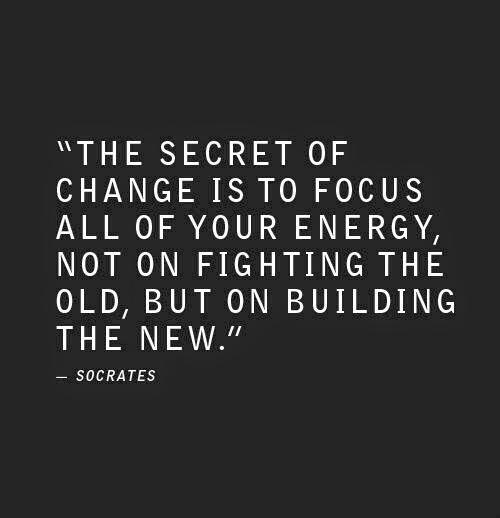
Because whether we believe it or not… they told us we would never vote, we would never fly, and we would never make it to the moon. Let’s prove whoever ‘they’ are wrong, yet again.
. 


 CreeGirl in a lonely world.